About
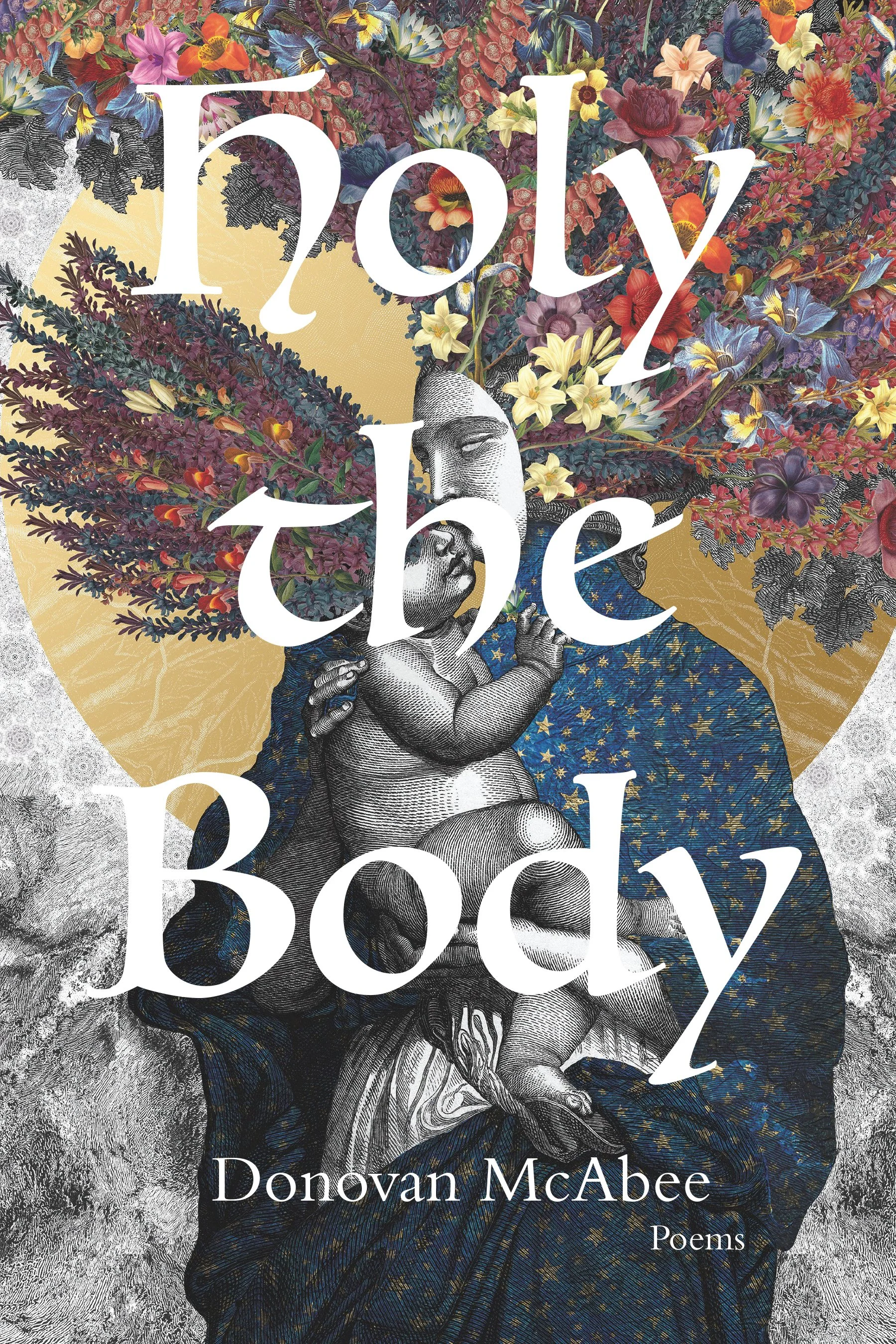
Donovan McAbee is a poet, songwriter, and essayist. His work has appeared in The New York Times, TIME magazine, The Hudson Review, The Sun Magazine (US), Garden & Gun, Poetry London, and a variety of other places. His poetry chapbook, Sightings, was released as part of the Floodgate Series, Vol 7. His academic monograph Charles Simic and the Poetics of Uncertainty was published in 2020. He grew up in a small town in South Carolina, in the foothills of the Blue Ridge Mountains. He holds a Master of Divinity degree from Princeton Theological Seminary and a PhD in Creative Writing and Contemporary Poetry from the University of St Andrews in Scotland. He lives in Nashville, Tennessee with his wife and their two children. His poetry collection Holy the Body is set to be released by Texas Review Press in February 2026.
Praise for Holy the Body:
[E]xquisitely funny and magically solemn . . . —MAJOR JACKSON, author of Razzle Dazzle
[S]pirited and tender . . . poems of deep humor and pathos. —PHILIP METRES, author of Fugitive/Refuge
[P]ortrays innocence alongside violence before a return to innocence through clear-sighted recollections. —PÁDRAIG Ó TUAMA, author of Kitchen Hymns
McAbee’s portrait of an open-handed, non-judgmental, big tent Christianity will appeal to all who seek connection . . . —KATE DANIELS, author of In the Months of My Son’s Recovery
[G]ems of faith, emotion, and longing . . . an apophatic theology that speaks to the holes in our hearts . . . —ERIKA MEITNER, author of Useless Junk
Holy the Body wrestles with ghosts and shadows, discovers Mother Teresa in a cinnamon bun in Nashville, Tennessee, and Jesus’s tears in a trick of light. At once dark and humorous, these poems explore the dynamics of loss, grief, and doubt, while chiseling out a hard- earned language for the sacred.
Recent Work
Books
[E]xquisitely funny and magically solemn . . . —MAJOR JACKSON, author of Razzle Dazzle
[S]pirited and tender . . . poems of deep humor and pathos. —PHILIP METRES, author of Fugitive/Refuge
[P]ortrays innocence alongside violence before a return to innocence through clear-sighted recollections. —PÁDRAIG Ó TUAMA, author of Kitchen Hymns
McAbee’s portrait of an open-handed, non-judgmental, big tent Christianity will appeal to all who seek connection . . . —KATE DANIELS, author of In the Months of My Son’s Recovery
[G]ems of faith, emotion, and longing . . . an apophatic theology that speaks to the holes in our hearts . . . —ERIKA MEITNER, author of Useless Junk
Holy the Body wrestles with ghosts and shadows, discovers Mother Teresa in a cinnamon bun in Nashville, Tennessee and Jesus’s tears in a trick of light. At once dark and humorous, these poems confront the religiosity of the US and explore the experience of faithful doubt, as God himself “goes under the knife.” The poems in this manuscript take the reader through the brutalities of the author losing his mother to melanoma and of resuscitating his own father, with “the cracking of sternum beneath my hands.” The collection chisels out a hard-earned language for the sacred, one which proclaims that the beauty we find in the midst of uncertainties is itself a solace that, as one of the final poems in the manuscript affirms, “is more than enough.”
Charles Simic and the Poetics of Uncertainty provides the first full account of the poetics of the former US Poet Laureate, who is one of the most popular and critically acclaimed English-language poets writing today. The book argues for uncertainty as the center of Simic’s poetics and addresses the ways that his poetry grows from and navigates various forms of uncertainty. Donovan McAbee addresses uncertainty regarding the national character of Simic’s poetry and how this is complicated by Simic’s identity as a Yugoslavian refugee to the United States. The book assesses the theological and linguistic uncertainties of Simic’s poetry and explores the ways that Simic articulates the aesthetic space created by poems, as a safe place of encounter for the reader. The book argues for the role of humor as a primary mode that holds together the uncertainties of Simic’s poetry, and finally, it articulates the way that within these uncertainties, Simic develops a deeply humane political poetry of survival. Along the way, Simic’s work is placed in conversation with key influences and other important American and international poets and writers, including James Tate, Mark Strand, Charles Wright, Nicanor Parra, Vasko Popa, and others.
Poems
SELECTED LIST
2025 “Hanging Out with Jesus on a Sunny Day” and “Cumberland Koans,” Bad Lilies, Summer.
2024 “Dedication to Craft,” Poetry London, Autumn.
2023 “The Tunnel,” The Sun, October.
2023 “Holding On,” EcoTheo Review, August 4.
2022 “Desert Sayings,” Harvard Divinity Bulletin.
2022 “Kiwi Shoe Polish,” Notre Dame Review, No. 52.
2021 “Little God,” Five Points, 20.3, Fall.
2021 “One-Eyed Jesus of the Sacred Heart,” The Christian Century, 138.15.
2020 “Delirium,” JAMA: The Journal of the American Medical Association, March 24.
2020 “Rupture,” JAMA: The Journal of the American Medical Association, March 17.
2019 4 Poems, “Divine Reticence,” “Cigarettes and Diapers,” “Grit,” and “Animal
Espionage,” The Hudson Review, Autumn.
2019 “Visitation,” The Greensboro Review, Fall.
2019 “Holy the Body,” The Sun, July 2019.
2019 “Sightings,” The Sun, May 2019.
2017 "Breath," Five Points, 18.1, Spring.
2017 "Waffle House Love," The Inquisitive Eater
2017 "Corpus," The Christian Century, 134.7
Songs
Essays
Creative Nonfiction
2024 “My Christian Faith Won’t Let Me Vote for Donald Trump or His Disciples,” TIME, October 28.
2024 “The Shared Solace in Southern Folk Songs,” Garden & Gun, April/May.
2023 “The Many Ways We Have Failed Young People Amid the Gun Violence Crisis,” TIME, November 21.
2023 “Ashes to Ashes,” Harpur Palate, Winner, Creative Nonfiction Award, 22.1.
2023 “The Southern Baptist Convention’s Long War for the Patriarchy,” TIME, June 20.
2023 “How Do We Respond to this Hell. In Nashville After the Shooting,” TIME, April 11.
2023 “Charles Simic: An Appreciation,” Plume, February. (hybrid creative-academic essay)
2021 “The Religious Door-Knockers Are Back,” The Christian Century, Dec 29. (memoir essay)
2020 “Staying Alive: How Disco Saved Daddy,” New York Times, July 10. (memoir essay)
Academic Essays
2016 Teaching Tactic: “Visual Exegesis,” Teaching Theology and Religion, January, 19.1, 77.
2007 “Kitchen Metaphysics: An Interview with Charles Simic,” Poetry Review, Fall, 97.3, pp. 76-84. (academic interview)
Speaking
“I Really Really Want to Judge You” dives into the story often referred to as “The Woman Caught in Adultery” and considers what it means to shed our judgments and live with humility.
“In the Desert” explores the story of Jesus’ temptation in the Desert and asks what might we learn for our own times in the wilderness.
“Unbound” explores the story of Lazarus and takes a hard look at those times in life when the miracle happens and when the miracle doesn’t.
“Can You Drink the Cup?”
Contact
Thanks for being in touch. If you'd like to contact me, or sign up to hear about events and publications, please enter your info. I look forward to hearing from you.